


Everything has its history
Everything has its history
 The town originated a long time ago. The centers of origin were Osówka stronghold, located in the vicinity of present Gałowo, and the trade settlement Stare Szamotuły (Old Szamotuły) located 2.5 km north of the present town centre, so called Nowe Szamotuły (New Szamotuły) within the area of Swidlin - Ostrówek town centre on the right bank of the Sama River
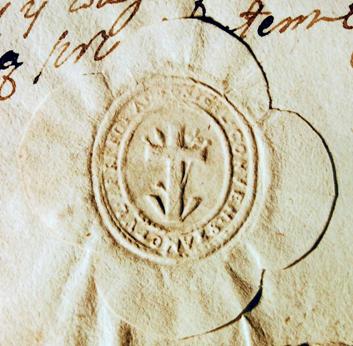
In 1231 the sources mentioned Stare Szamotuły for the first time. The settlement was granted the right to open the market by Przemysł I before 1257. In 1284 Poznan Castellan Tomisław gained from the prince Przemysł II for Nowe Szamotuły and eleven neighboring villages a dissension from market fees and a privilege to allocate these settlements on the western law. For the first time in the sources, Nowe Szamotuły were called a town in 1383 but it existed before about 1306 when St. Stanislaus parish was created. City rights were granted in 1420 and renewed in 1450 and 1455. It was probably then, when the old crest (the head of John the Baptist in the golden bowl on the red background) was replaced by a new one – crowned head with blue background bottomed with jewels in the shape of rhombuses. Later the crest was decorated by two ribbons with the date 1455 on the sides. Such crest was obligatory in times of the Second Republic of Poland and after World War II until 1950. At present, in connection with the tradition, the crest is still mandatory. Szamotuły was a private property of Swidwa-Szamotulscy and Górka families.

For the first time in the sources, Nowe Szamotuły were called a town in 1383 but it existed before about 1306 when St. Stanislaus parish was created. City rights were granted in 1420 and renewed in 1450 and 1455. It was probably then, when the old crest (the head of John the Baptist in the golden bowl on the red background) was replaced by a new one – crowned head with blue background bottomed with jewels in the shape of rhombuses. Later the crest was decorated by two ribbons with the date 1455 on the sides. Such crest was obligatory in times of the Second Republic of Poland and after World War II until 1950. At present, in connection with the tradition, the crest is still mandatory. Szamotuły was a private property of Swidwa-Szamotulscy and Górka families.Afterwards it was ruled by many, Rokossowki family and Korzbok-Łacki family, among others. In 1455 a parish school was established at St. Stanislaus the Bishop Church under the auspices of magistrate and the owners of the town. The school had many noble pupils, who remarkably contributed to the development of Polish culture. It educated among others, later professors of Kraków Academy Wojciech Krypa, Jan Paterka, Marcin Cichosz, Mateusz Krypa, Szymon from Szamotuły, Mateusz Kmita, Grzegorz Snopek – a chancellor of Lubranski Academy in Poznan in 1534, later a professor and chancellor of Kraków Academy 1537-1538, a founder of two scholarships for poor students from Szamotuły and its vicinity (the first regular Polish scholarship foundation). A composer Wacław from Szamotuły made the town famous all over Europe. He was an eminent musician, a court composer and bandmaster of the king Zygmunt August, commemorated by the monument created by two Poznan sculptors, Bazyli Wojtowicz and Czesław Wozniak in 1947. Little is also known about the birth of the two renowned composers from Szamotuły, Xavery and Philipp Scharwenka (Xavery – a composer, a piano virtuoso; Philipp – a composer, a music teacher). The two brothers were widely known as German composers.
 Those two famous pianists and composers of the turn of 19/20th century were renowned in Europe and all over the world. They were born and brought up in Szamotuły. Their later life was connected with Poznan and Berlin, where they went to schools and started their artistic carriers. Although they spent most of their life in Germany and they were feeling the citizens of that country, they never denied Polish origin and they were inspired by Polish music and dances. In their contemporary times they both were well known in all the most important parlors of Europe and the world. Later their works were gradually forgotten. Recently, first in Germany, later in Poland, the works of Scharwenka brothers have regained popularity. For a few years, in Szamotuły, a place of birth of Scharwenka brothers, there have been organized festivals of Scharwenka music. The event gained a stable position in the Szamotuły timetable of cultural celebrations with international range.
Between the 15th and 17th century the town was an important centre of oil, textile, pottery and carriage industry. In the 16th century it became one of the most active centers of Renaissance and reformation in Wielkopolska. Jan Swidwa-Szamotulski and Łukasz III Górka – the then owners of the town were supporters of the reformation movement.
In 1551, in the outhouse of the Górka Castle, the Czech Brothers set up the first in Wielkopolska publishing house. They pressed mainly Czech religious prints, among others they published one of the most important Czech antiquities „Czech Hymnal” (1561). In 1558-1561 the printing house was managed by a Moravian from Ujezd - Aleksander Aujezdecki. The Castle is connected with the story of a Lithuanian princess – Halszka from Ostroróg, forcefully married to Łukasz III Górka and imprisoned in one of the towers (which took the present name after her – Halszka Tower). In the 17th century a distinguished thinker and scientist, doctor, naturist and philosopher Jan Jonston, the author of numerous scientific publications (1603-1675) was born in Szamotuły. He descended from the environment of Czech Brothers from Szamotuły and Ostroróg and many years later, together with Jan Amos Komenski, made the Czech Brothers’ Leszno District famous all over the world. The turn of 16/17th century was the time of prosperity in Szamotuły. After the Polish-Swedish Wars the decayed town did not come back to wealth before the beginning of the 19th century. In 1808 elementary people’s school, based on the principles specified by the Commission of National Education, was created in here. In1815 Szamotuły became a part of the Great Duchy of Poznan. In 1818 Szamotuły Poviat was created. After minor boarder corrections, it remained unchanged until 1975. During the Prussian Partition the citizens of Szamotuły were actively resisting the pressure of Germanization. Many of them took part in all national uprisings, starting from the Kosciuszko Insurrection in 1794. Born in Szamotuły, Edmund Callier was not only a leader of military forces in Mazowsze in the Uprising 1863-1864 but also a renowned publicist, a writer and Wielkopolska social and culture activist.

In 1838 the Citizens’ Mess was established in Szamotuły. It became a centre of economic, cultural and social life. A building of so called “Ognisko” (fire or centre) is the visible remain of its activities today. Between 1840 and 1846 the Association of Collectors of Domestic Antiquities - the first archaeological society in Poland functioned in this building. Between 1918 and 1919 the town was one of the most important centers of the Wielkopolska Uprising and Maksymilian Ciężki was one of the most distinguished insurgents. He was a Wielkopolska insurgent, a Polish Army officer and a co-creator of the success in breaking the code of the German coding machine “Enigma”. His life is a sad story of the emigrant, who in fear of communist authorities’ repressions could not come back to his homeland. Problems in contacts with family and unfair treatment of the British did not reward his deserts. And it was just Maksymilian Ciężki, who through his activities contributed to working out the German coding machine, which definitely shortened the fights with Germans and brought nearer the end of World War II. Maksymilian Ciężki entered the public life at the age of 16, when at the beginning of World War I he started a scouting organization in Szamotuły. In fact the organization was a cover up for the recruitment of volunteers to the Polish Legions. In 1917 he forcefully joined the German army. Being on a leave, he managed to set up a conspiracy organization, which coordinated the purchase of guns from the Germans. At the point of outbreak of the Wielkopolska Uprising, Maksymilian Ciężki armed Poznan workers and replaced German clerks with the Polish ones. Later he joined one of the insurgent troops and seized Wronki. His patriotic attitude definitely contributed to the success of the Uprising. Since 1920 he was a student of the Military Communication Institute in Zegrze. After graduation he commanded radio stations in Poznan in the headquarters of Army VI, Army II, 18th Infantry Division and the Middle Lithuania Forces in the Central Radio Station in Warsaw. In 1923 he was assigned to the Second Department of the General Headquarters. In 1929 intensive activities aiming to select the best mathematicians for cryptology purposes started. The role played by our countryman in the whole process cannot be overrated. The whole procedure led to working out the coding machine, which at that time was treated as so advanced invention that decoding it seemed impossible. However, the impossible became possible, partly thanks to our countryman, whose remains came back to Poland only in 2008 and were buried at the cemetery in Szamotuły. A monument of Maksymilian Ciężki was unveiled in front of the park of his name on the same day. On 3rd May 2009 Maksymilian Ciężki was posthumously decorated with the Order of Polonia Restituta by President of the Republic of Poland - Lech Kaczynski, in recognition of his merits for the independence of Poland as well as his national and public achievements.

Canon (priest) Henryk Szklarka-Trzcielski should also be mentioned as one of the most eminent people from Szamotuły. He was an officer of the Polish Armed Forces, in 1939 he became a chaplain in Oborniki Defense Battalion and since 1944 - a lieutenant-colonel and a chaplain of Home Army. He was also a Warsaw insurgent, insurgent priest in the Old Town, decorated with the Silver Cross of the Virtuti Militarii and in 2011 promoted to colonel.
He was born in 1908 in Polesie in Nowy Tomysl Poviat and he was strongly connected with Szamotuły where he attended Comprehensive School and later Junior High School.
It was here, where his character and patriotic approach were shaped. Neither Nazis nor
communist repressions changed his attitude.
The intensive life of this distinguished citizen is enough for a few people. The time of
World War II was a period of his intensified activities. He met many influential people eg. Tadeusz Bór-Komorowski and general Stefan Grot-Rowecki, who were the icons of the Warsaw Uprising.The words God, Honor, Homeland made a life motto, thoroughly followed by him. He devoted his life to God, not forgetting about honor and homeland. His life was full of heroism and devotion. The love for God was realized by love to people, as he was always full of goodwill and understanding.
There are people who are nice to talk to and who are surrounded by a friendly atmosphere. Priest Henryk Szklarek–Trzcielski was such a person.

The Priest Senior always spoke about his educators with respect and recognition. In one of the interviews he said: looking at high moral and religious standards of the school staff in the Junior High School in Szamotuły, one should not be surprised by the fact that their students brought great universal values into social, political and economic life as well as military structures (…) and that they fulfilled their mission in defence and service of rights and duties towards the needs of other people.
Priest Henryk Szklarek–Trzcielski was able to multiply and give to his fellow human beings the talents he received from God and wise people. We are proud that he was a son of Szamotuły region.
